
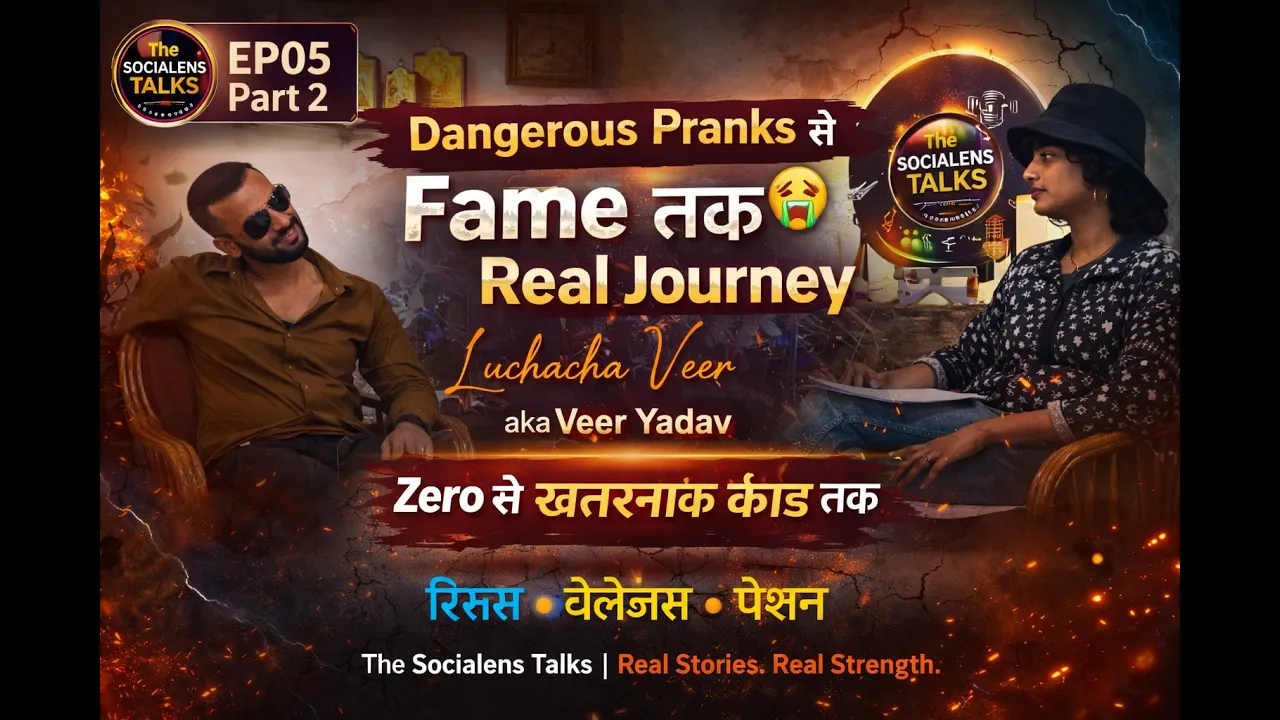
Luchacha Veer Part 2 Podcast | Viral Fame, Betrayal, Anger, Pranks & Life Beyond Social Media
Some podcast episodes feel entertaining.
Some feel chaotic.
And then there are conversations that feel completely unpredictable from beginning to end.
The second conversation with Luchacha Veer on The Socialens Talks was exactly that kind of episode.
Nothing about this podcast felt scripted.
No fake intellectual talk.
No polished influencer personality.
Just raw emotions, dangerous memories, funny incidents, anger issues, betrayal stories, internet fame, village life, loyalty, trust issues, money, and the reality behind becoming viral in India.
What makes this episode interesting is that Veer never tries to sound perfect.
In fact, many times during the conversation, he openly accepts his flaws.
He talks about anger.
Impulsive decisions.
Trust issues.
Emotional mistakes.
And the dangerous situations he has faced while creating prank videos across India.
But underneath all the chaos, there is another side of him that slowly appears during the podcast.
A person who deeply understands human behavior.
A creator who built everything from zero.
And someone who still prefers village simplicity over artificial city culture.
That balance between madness and honesty is what makes this episode memorable.
Viral Fame Changed His Life — But Not His Personality
Today millions of people know Luchacha Veer from his prank videos, viral reels, and fearless public content.
But according to him, fame never completely changed who he was.
He still considers himself the same person internally.
Same mindset.
Same attitude.
Same way of talking.
The only difference is that success allowed him to invest in things he always wanted.
Land.
Vehicles.
Gold.
Property.
Better lifestyle.
But emotionally, he still behaves like the same village guy who once started creating videos without overthinking anything.
That simplicity becomes visible multiple times during the podcast.
Even after becoming popular, he still laughs at himself naturally.
He never speaks like a celebrity trying to maintain an image.
And perhaps that is why people connect with him emotionally.
Because he still sounds real.
Not manufactured.
The Dangerous Side Of Public Prank Content
Many people watch prank videos casually on YouTube.
But very few people understand how risky those situations can become in real life.
During the podcast, Veer shared several incidents where things became physically dangerous.
One of the wildest stories involved him setting his own bike on fire during a prank after a woman rejected his friendship proposal as part of the act.
What started as a public prank quickly turned into chaos.
Crowds gathered.
Police arrived.
Traffic stopped.
People panicked.
And eventually the situation escalated so badly that he was dragged to the police station.
Another shocking story involved a prank in a village during lockdown.
What started as a normal interaction slowly turned aggressive when local boys misunderstood the situation.
Within moments, people attacked his vehicle with sticks and damaged the car badly.
Listening to these incidents makes one thing very clear:
Viral content often comes with real-world consequences.
And creators sometimes put themselves into dangerous situations simply for audience entertainment.
Anger Can Destroy Everything
One of the strongest moments in the episode came when Veer spoke openly about anger.
Not casually.
Not jokingly.
But honestly.
He admitted that anger has the power to destroy a person completely.
And many times in life, he made impulsive decisions without thinking about consequences.
Even burning expensive vehicles.
Destroying things emotionally.
Making decisions first and regretting later.
But at the same time, he also explained his mindset.
He believes that overthinking stops people from acting.
According to him, most people remain stuck in life because they keep thinking instead of doing.
So even if mistakes happen, he prefers action over regret.
That philosophy may sound extreme to many people.
But it also explains how creators like him build fearless personalities online.
Because when someone stops worrying about public judgment, they naturally become unpredictable.
And unpredictability creates attention on the internet.
Why Village Life Still Feels Better Than City Fame
Despite social media success, expensive cars, and internet popularity, Veer repeatedly mentioned that he still prefers village life over city life.
For him, villages feel more peaceful.
More human.
More natural.
He specifically talked about how people in hill areas and smaller places still live with simplicity.
Pure food.
Clean air.
Natural behavior.
Less artificial competition.
In contrast, he described big cities as mentally exhausting places where people constantly chase status and appearance.
That observation connects deeply with many young people today.
Especially those who feel emotionally tired because of fast digital lifestyles.
Interestingly, this emotional conflict between internet success and peaceful living also connects with themes discussed in Chirag Tanwar Podcast, where conversations around spirituality, modern society, and mental clarity were explored deeply.
Fame Feels Good — But Respect Feels Better
One of the most emotional parts of the conversation came when Veer described his first fan interaction.
At that time, he only had around 3000 followers.
Yet one stranger recognized him publicly and asked for a photo.
That moment stayed in his memory permanently.
Not because of money.
But because somebody actually knew him.
That feeling of recognition changed something inside him.
And today, even after gaining massive followers, he still values public recognition emotionally.
He said something extremely important during the conversation:
Making money is good.
But building a name is more powerful.
Because when people wait for your arrival, remember your face, and recognize your work, life feels meaningful.
That statement explains modern creator culture perfectly.
Many creators initially start for money.
But eventually they become addicted to identity, recognition, and emotional validation from audiences.
The Dark Reality Of Trust & Team Betrayal
Another major topic in the podcast was betrayal.
Especially inside creative teams.
Veer openly admitted that some of the biggest disappointments in his career came from people working closely with him.
Editors.
Team members.
People he trusted personally.
He even shared incidents where money was secretly taken from accounts connected to his work systems.
That experience changed his mindset completely.
Today, he prefers professional boundaries over emotional attachment in business relationships.
His philosophy became very clear during the discussion:
Work together professionally.
But never blindly trust people emotionally inside business.
Whether someone agrees with his perspective or not, his experiences reflect a harsh reality many creators silently face online.
As creators grow, managing people often becomes harder than creating content itself.
And sometimes emotional trust becomes financially dangerous.
This realistic discussion around loyalty, trust, and emotional survival also emotionally connects with ideas discussed in Prince Divas Dabral Podcast, especially around mental pressure and personal struggles behind public success.
Why He Believes Overthinking Destroys Creativity
Throughout the podcast, one sentence kept repeating in different ways:
“Stop thinking too much. Just start.”
According to Veer, most people fail before even trying because they remain trapped inside fear and hesitation.
He believes creators should begin first and learn later.
Not wait endlessly for perfect planning.
Whether someone wants to start YouTube, public speaking, business, or content creation, his advice remains the same:
Action creates growth.
Overthinking creates delay.
That raw mindset explains how many internet creators grow rapidly despite having imperfect beginnings.
They simply start before feeling ready.
And eventually improve publicly.
The Simplicity Behind Viral Internet Characters
What makes this podcast different from normal influencer interviews is that Veer never tries to behave like a motivational speaker.
He openly accepts contradictions inside his personality.
Sometimes emotional.
Sometimes aggressive.
Sometimes thoughtful.
Sometimes reckless.
But always direct.
That honesty makes the conversation surprisingly human.
Instead of pretending to be perfect, he allows audiences to see confusion, mistakes, anger, ambition, humor, and insecurity together in one personality.
And perhaps that is why audiences continue watching creators like him.
Because real people are never one-dimensional.
Why This Podcast Connects With Young Audiences
This episode speaks strongly to modern youth because it discusses emotions most people hide publicly.
Fear of failure.
Need for recognition.
Internet pressure.
Money obsession.
Loneliness after fame.
Trust issues.
Relationship confusion.
Village vs city mindset.
And the emotional chaos hidden behind online entertainment.
At one level, the episode feels funny and energetic.
But underneath, it quietly reflects the psychological reality of modern internet culture.
Especially for young creators trying to survive inside social media competition.
That emotional realism is what makes this conversation feel different from traditional podcast interviews.
Final Thoughts
The Luchacha Veer Part 2 Podcast is not a polished motivational episode.
It is messy.
Loud.
Funny.
Emotional.
Aggressive at times.
But extremely real.
And maybe that honesty is exactly why people continue connecting with conversations like these.
Because in a digital world full of scripted personalities, overly edited emotions, and fake perfection, raw conversations still feel refreshing.
This episode shows both sides of internet fame:
The excitement of becoming known.
And the emotional cost hidden behind public entertainment.
Most importantly, it reminds viewers that viral creators are also ordinary humans trying to figure life out while millions watch them online.
And perhaps that is the real reason this podcast leaves an impact long after it ends.
Related Podcasts From The Socialens Talks
If you enjoyed this conversation, you may also like:
- Luchacha Veer Podcast
- Chirag Tanwar Podcast
- Prince Divas Dabral Podcast
- Sunny Dayal Podcast
- Kuldeep Singh Dharwal Podcast
