
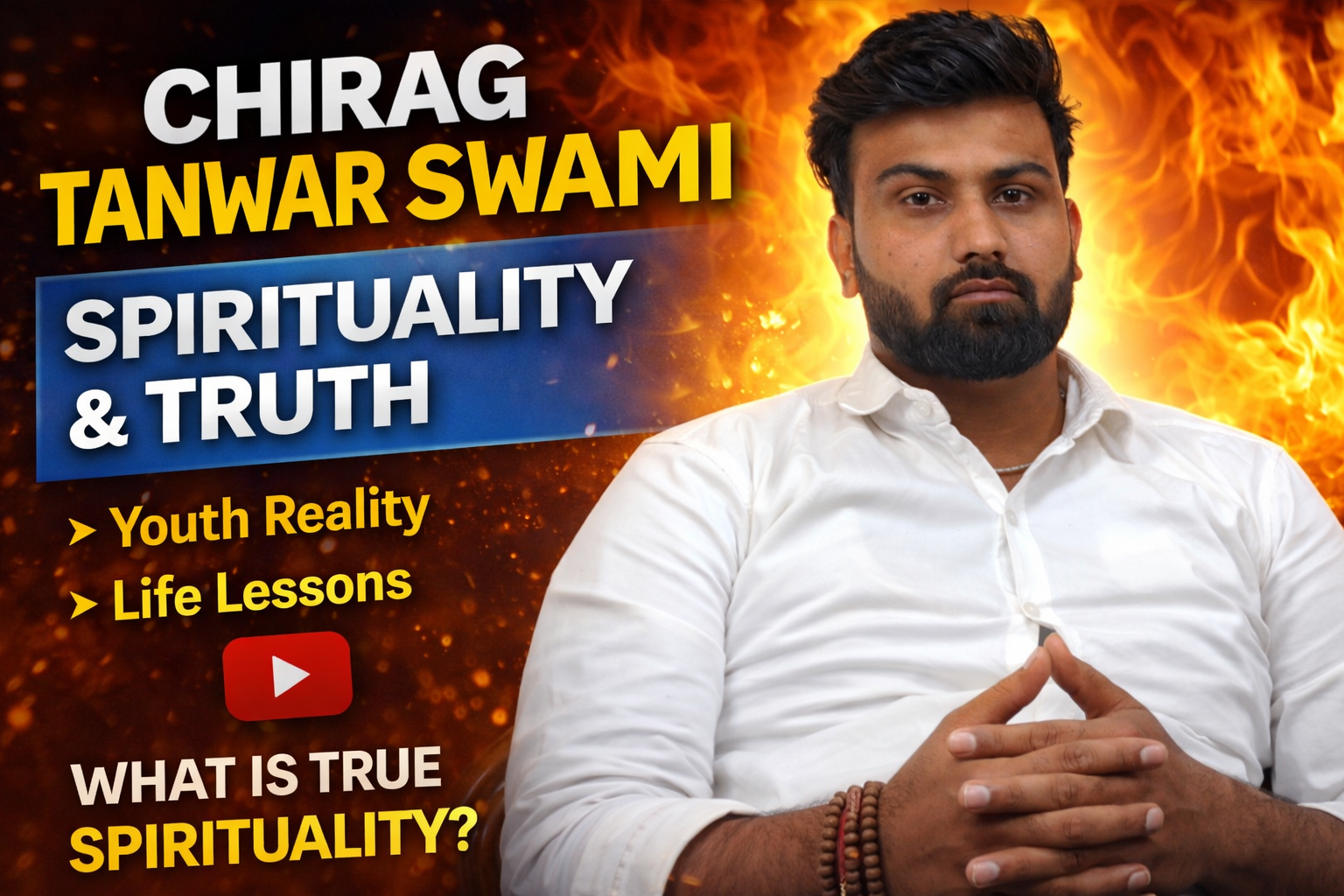
Chirag Tanwar (Swami Ji) on Spirituality, Youth, Social Media, Respect & Life Lessons
Social media has changed the way people see success, personality and even reality.
A person may appear confident, successful and happy on camera, while their personal life may contain struggles, responsibilities and experiences that an audience never sees.
This difference between public image and personal reality became an important theme in the conversation with Chirag Tanwar, also known as Swami Ji, on The Socialens Talks.
The conversation moves across spirituality, family values, childhood experiences, youth culture, social media, discipline, sports, respect and the pressure that can come with maintaining a public personality.
You can also explore more conversations on The Socialens Talks Episodes page.
Who Is Chirag Tanwar (Swami Ji)?
Chirag Tanwar is a public personality and content creator known for his presence on social media and discussions around spirituality, life, society and youth.
However, this conversation goes beyond his online identity.
It explores the person behind the public image — his family, childhood experiences, struggles, values and the lessons that influenced his thinking.
This becomes an important part of the conversation because social media often gives audiences only a selected view of someone’s life.
The Difference Between Online Image and Real Life
One of the central ideas of the conversation is the difference between what people see online and what happens in someone’s real life.
Social media usually highlights selected moments:
- Achievements
- Entertainment
- Confidence
- Popularity
- Celebrations
- Success
But these moments do not necessarily represent the complete emotional reality of a person.
Chirag shared a personal experience in which he continued interacting with people publicly while dealing with difficult personal news.
The experience highlighted a simple reality:
Someone entertaining an audience may also be dealing with personal pain at the same time.
That is why an online profile should never automatically be treated as the complete story of a person’s life.
What Does Spirituality Mean Beyond Social Media?
The conversation also explores spirituality and the meaning associated with Chirag’s identity as “Swami.”
Rather than presenting spirituality simply as an online personality, the discussion connects it with values such as:
- Discipline
- Humanity
- Sacrifice
- Respect
- Self-control
- Responsibility
- Emotional balance
The conversation also touches on the importance of guidance and the role of a guru or mentor.
For Chirag, spirituality is connected with how a person behaves and responds to situations rather than simply what a person says publicly.
Why Respect Matters More Than Online Popularity
Another recurring subject is respect.
Social media can provide visibility, followers and attention.
But visibility does not automatically translate into respect.
The discussion looks at different types of content involving:
- Vulgarity
- Unnecessary controversy
- Attention-seeking
- Shock value
- Artificial personalities
The conversation raises a broader question:
What kind of image are we creating, and what does that image mean for our family, younger viewers and society?
For Chirag, public success is connected with dignity and personal values rather than online attention alone.
His Father’s Influence on His Life
One of the more personal parts of the conversation concerns Chirag’s father.
He talks about the struggles his family experienced and the role his father played during difficult circumstances.
He also recalls a childhood memory involving only seven rupees being available at home during a village fair.
Five rupees were offered in prayer, while the remaining two rupees were used to buy balloons for the children.
Although the amount was very small, the memory represents something much larger for Chirag — the sacrifices made by parents and the memories that stay with children even after circumstances change.
He remembers the experience with gratitude rather than embarrassment.
The Lesson He Learned From His Father
The conversation also discusses an old video in which Chirag had used abusive language.
His father watched the content and questioned him about it.
Instead of ignoring the criticism, Chirag listened.
According to the conversation, that interaction influenced the direction of his content and the kind of public image he wanted to create.
It is an example of how feedback from family can sometimes become an opportunity for self-correction.
How Childhood Experiences Shape Values
Chirag’s childhood experiences also influenced the way he thinks about:
- Money
- Family
- Opportunities
- Success
- Responsibility
- Gratitude
Financial limitations can change the way people understand the value of resources and opportunities.
For Chirag, childhood memories are not simply stories from the past. They form part of the experiences that influenced his present outlook.
From Boxing to a Different Life Journey
Another interesting part of Chirag’s journey is his connection with boxing.
He discusses reaching national and international levels through the sport.
Boxing introduced him to:
- Physical training
- Discipline
- Competition
- Pressure
- Frustration
- Persistence
His life eventually moved in another direction, but the discipline associated with sports remained an important part of his outlook.
What Sports Can Teach About Discipline
Sports provide lessons that can extend far beyond competition.
Training requires consistency even when motivation is low.
Competition requires accepting both success and failure.
And discipline requires continuing even when immediate results are not visible.
These lessons connect closely with the wider discussion about young people and social media.
In an environment where instant recognition can appear attractive, the slower process of building discipline can easily be overlooked.
Social Media and the Comparison Problem
The conversation also examines how social media can influence the way people compare themselves with others.
People may compare their:
- Success
- Lifestyle
- Relationships
- Popularity
- Money
- Travel
- Achievements
with what they see online.
But online content generally represents selected moments rather than the complete reality.
As a result, comparing an ordinary day in one’s own life with someone else’s carefully selected online moments can create an incomplete picture.
Is Social Media the Problem?
The conversation does not simply reject social media.
Social platforms can provide opportunities for:
- Creativity
- Communication
- Learning
- Entertainment
- Business
- Networking
- Content creation
The discussion instead focuses on how people use these platforms.
The technology itself is only one part of the equation. Awareness, self-control and responsible use also matter.
Viral Fame Is Not the Same as Success
The podcast also questions the growing focus on becoming viral.
A video can receive millions of views.
A creator can gain thousands of followers.
A controversial statement can attract enormous attention.
But these numbers do not automatically answer a more personal question:
What kind of person are you becoming while chasing that attention?
The conversation places importance on respect, family and personal values alongside public visibility.
The Pressure Behind a Public Personality
Being visible online can create expectations.
Audiences may expect creators to constantly provide:
- Entertainment
- Confidence
- Positivity
- Humour
- Opinions
- New content
But real life does not operate according to a content calendar.
People can experience grief, disappointment, financial pressure, family problems and emotional exhaustion.
The discussion therefore highlights a basic reality:
The person behind the screen remains a human being.
Why Family Values Remain Important
Despite discussing social media, spirituality and fame, the conversation repeatedly returns to family.
Family values can influence:
- Behaviour
- Decision-making
- Discipline
- Respect
- Responsibility
- Relationships
The influence of Chirag’s father is particularly important because his guidance remained relevant even as Chirag developed his own public identity.
Youth and the Search for Instant Validation
Young people today have access to enormous amounts of information and constant digital feedback.
Likes, comments, shares, followers and views can make external validation feel extremely important.
The conversation encourages a different perspective — developing internal discipline and learning to distinguish between temporary attention and meaningful progress.
Why Patience Still Matters
Online culture can make success appear immediate.
People often see the final result without seeing the years of work behind it.
They may not see:
- Practice
- Rejection
- Financial difficulties
- Training
- Mistakes
- Personal sacrifices
Meaningful growth can therefore take considerably longer than social media makes it appear.
Spirituality in the Age of Social Media
The conversation also touches on the rise of spiritual personalities and “viral babas” online.
It raises questions about the difference between genuine spirituality and spirituality presented mainly as online performance.
The broader theme is authenticity.
Spirituality, from the perspective discussed in the conversation, is connected with genuine values rather than appearances alone.
Helping Others Without Seeking Attention
Another meaningful part of the conversation concerns helping people facing financial difficulties.
Chirag discusses support provided through his group to people who may need assistance, including elderly people and families facing difficulties.
The discussion makes an important distinction between:
doing something for attention and doing something because it needs to be done.
Why Humanity Still Matters
Ultimately, the conversation moves beyond spirituality and social media.
It becomes a discussion about humanity.
In a digital world where people can become divided by:
- Online identities
- Opinions
- Status
- Money
- Popularity
- Social differences
basic human values can easily be overlooked.
Respect, patience, empathy and responsibility remain relevant even as technology continues to change.
What Young People Can Learn From Chirag Tanwar
1. Visibility Is Not Everything
Being seen by millions does not automatically mean that every area of life is successful.
2. Listen to Genuine Feedback
Parents, mentors and experienced people can sometimes provide perspectives that help us recognise our mistakes.
3. Develop Discipline
Whether through sports, education, work or content creation, consistent effort matters.
4. Avoid Comparing Your Full Life With Online Highlights
Social media usually shows only selected parts of someone’s life.
5. Protect Your Self-Respect
Popularity does not have to come at the cost of personal dignity.
6. Think Before Creating Content
Content created today can influence how people perceive you in the future.
7. Stay Connected With Family
Family experiences can shape values and perspectives for many years.
8. Be Patient
Meaningful progress usually takes more time than viral culture suggests.
Key Takeaways From The Chirag Tanwar Podcast
- Social media shows only one part of reality.
- Public personalities can also experience private struggles.
- Family guidance can influence important life decisions.
- Childhood experiences can shape adult values.
- Sports can develop discipline and persistence.
- Viral attention and meaningful success are not necessarily the same.
- Respect and dignity remain important while creating content.
- Comparison with online lifestyles can create an incomplete picture.
- Spirituality is connected with genuine values and behaviour.
- Young people can benefit from patience, discipline and self-awareness.
- Technology itself is not necessarily the problem; how it is used matters.
- Humanity and respect remain important in a digital society.
Frequently Asked Questions
Who is Chirag Tanwar?
Chirag Tanwar, also known as Swami Ji, is a public personality and content creator whose conversation with The Socialens Talks explores spirituality, youth, social media, family values, discipline and society.
What is discussed in the Chirag Tanwar Podcast?
The conversation covers spirituality, social media, youth culture, family values, childhood experiences, boxing, discipline, public image, fame, respect and social responsibility.
What did Chirag Tanwar discuss about social media?
The conversation examines social media’s influence on comparison, validation and public perception while also recognising its opportunities for creativity, communication, learning and content creation.
Did Chirag Tanwar discuss his childhood?
Yes. He shared memories related to his family’s financial circumstances and discussed the influence of his father on his life and values.
Did Chirag Tanwar discuss boxing?
Yes. He discussed his boxing journey, training, competition, discipline and how his life eventually moved in another direction.
What message does the podcast offer young people?
The discussion encourages discipline, patience, self-control and respect rather than relying only on online validation or temporary popularity.
Related Conversations From The Socialens Talks
If you found Chirag Tanwar’s discussion interesting, you can explore these related conversations:
Amit Nautiyal
A conversation around music, discipline, youth and personal growth.
Read the Amit Nautiyal Podcast
Sunny Dayal
A conversation around music, family values and the journey behind creativity.
Anshul Negi
A conversation exploring social media, acting, fame and youth experiences.
Prince Divas Dabral
A conversation around dance, social media, pressure and personal struggles.
Read the Prince Divas Dabral Podcast
Luchacha Veer
A conversation about village life, content creation, friendship and social media reality.
Read the Luchacha Veer Podcast
Aditi Sharma
A conversation around identity, dignity, inclusion and social acceptance.
Kuldeep Singh Dharwal
A conversation about poetry, creativity, personal expression and authentic content creation.
Read the Kuldeep Singh Dharwal Podcast
You can also explore all conversations on The Socialens Talks.
Watch The Full Chirag Tanwar Podcast
The complete conversation is available on YouTube.
Watch Chirag Tanwar Podcast on YouTube
Final Thoughts
The Chirag Tanwar Podcast is ultimately a conversation about staying grounded while living in a world increasingly shaped by social media.
It moves from spirituality to family, childhood struggles to boxing, public image to private emotions, and online fame to the importance of respect.
What makes the conversation meaningful is that it looks beyond the person people see online and explores some of the experiences behind that public identity.
In a world where attention can be temporary and online popularity can change quickly, the conversation brings attention back to values that remain relevant:
discipline, patience, family, respect, humanity and self-awareness.