
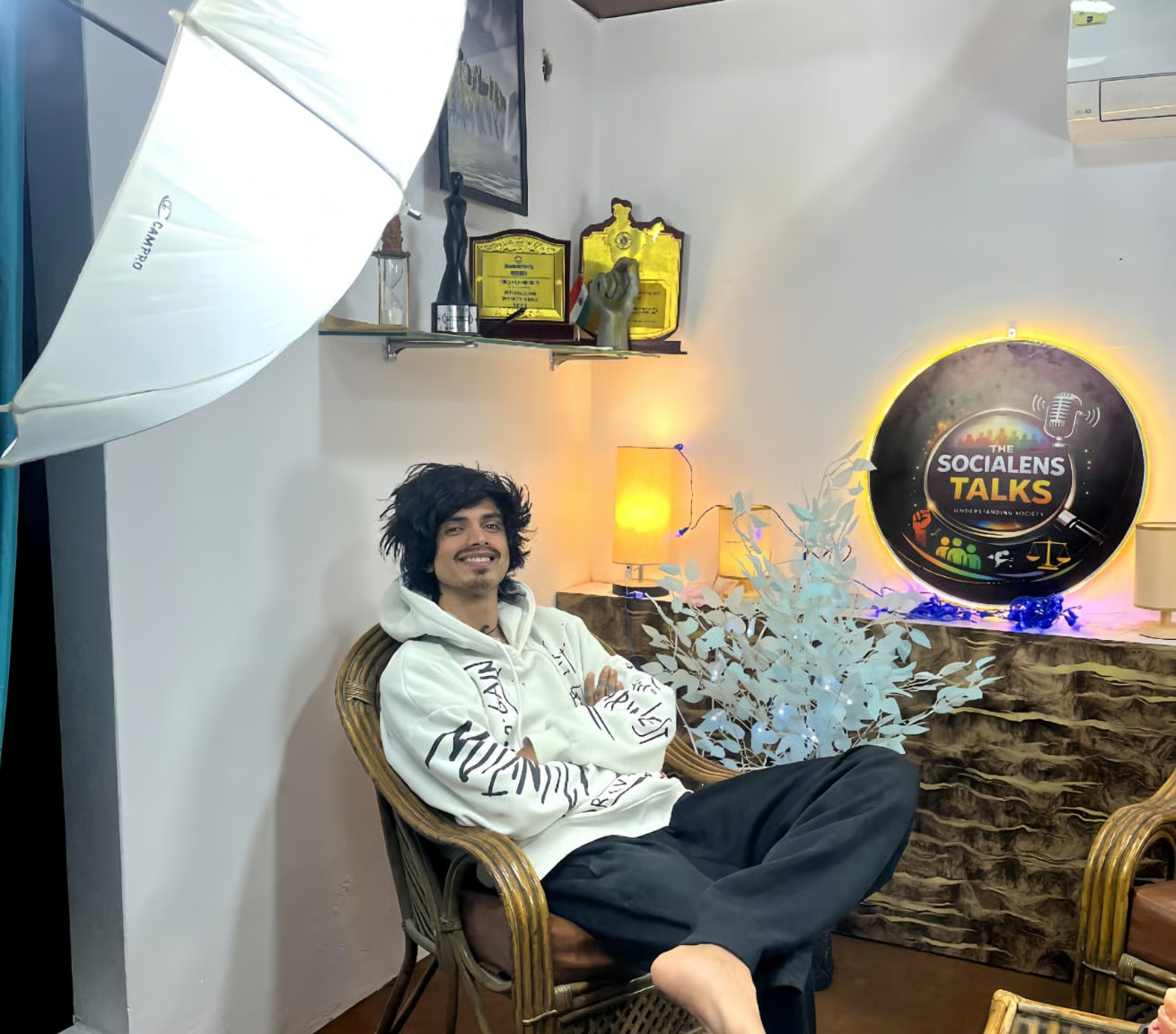
Prince Divas Dabral Podcast | Dance Journey, Creative Struggles, Tattoos, Social Media Pressure, Stress, Success & Life Beyond Fame
When Passion Meets Reality
A creative journey rarely follows a straight line.
A passion may begin with excitement, grow through practice and eventually become a serious part of someone’s identity. But as life changes, responsibilities increase and circumstances evolve, the relationship with that passion can also change.
In this episode of The Socialens Talks, Prince Divas Dabral speaks openly about his journey with dance, the competition he experienced, the influence of social media, tattoos, financial responsibilities, emotional pressure, changing youth behaviour, respect, success and life beyond professional performance.
The conversation is not limited to dance.
It is also about what happens when a person grows older and begins looking at success, passion and life from a different perspective.
The Beginning of Prince’s Dance Journey
Prince shared that his serious dance journey started around 2014, during his school years.
His entry into dance was not built around a large professional academy or a celebrity mentor. Much of his learning came through observation, friendship, practice and repetition.
He also remembered learning dance from his friend Amit.
Interestingly, Amit later moved towards music while Prince continued exploring dance.
Their different journeys highlight something common in creative careers: two people can start with similar interests but eventually discover completely different paths.
Learning Dance Through Practice
For Prince, dance developed gradually.
There was no instant success.
Learning meant watching others, practising movements and improving through experience.
The dance environment was also competitive.
There were always people who could dance faster, perform differently or bring stronger techniques and styles.
That competition became part of the learning process.
For an aspiring dancer, passion may start the journey, but practice and the ability to continue despite competition become equally important.
The Dance World Before Social Media
One of the interesting parts of Prince’s conversation was his comparison between the creative environment of his early years and today’s social media era.
Today, a dancer can publish a performance within minutes through:
- YouTube
- Reels
- short-form videos
- other digital platforms
This can provide artists with opportunities to reach audiences directly.
But when Prince started dancing, social media did not provide the same level of visibility.
There were fewer opportunities for an individual artist to create content, distribute it independently and reach a large audience.
This means that the struggle of an artist existed before social media, but the nature of that struggle has changed.
What If Social Media Had Come Earlier?
During the conversation, Prince reflected on what his journey might have looked like if today’s social media ecosystem had existed when he was actively pursuing dance.
It was an interesting reflection on timing and opportunity.
Talent, passion and opportunity do not always arrive at the same time.
A person may have the ability and determination, but the available platforms and technology can influence how easily that work reaches people.
For today’s young creators, social media provides opportunities that earlier generations did not have in the same way.
At the same time, today’s creators also face the pressure of constantly producing content and staying visible.
Tattoos, Identity and Personal Meaning
The conversation also moved into a more personal area when Prince spoke about his tattoos.
For him, tattoos were connected with personal meanings rather than being only a fashion choice.
He discussed tattoos associated with:
- spirituality
- time
- identity
- his name
- personal symbols
- Michael Jackson
He also spoke about the physical experience of getting tattoos, including long sessions lasting around 7–8 hours.
Some of the money he earned through performances was also spent on tattoos.
This part of the conversation gave a glimpse into how personal identity can become connected with creative expression.
Michael Jackson as an Inspiration
Michael Jackson has an important place in Prince’s creative journey.
His influence was connected particularly with dance and performance.
For many young artists, inspiration begins by watching someone whose work creates the desire to learn.
For Prince, Michael Jackson became part of that inspiration.
The influence was not simply about copying a performer. It became connected with Prince’s own relationship with dance and his creative identity.
What Does Success Mean?
When Prince was asked about success, his answer was grounded in everyday life.
For him, success is connected with:
- earning enough
- supporting his family
- keeping his parents happy
- having peace in life
This perspective moves the conversation away from the usual definitions of success based only on fame, followers or luxury.
For someone pursuing a creative career, success can also mean reaching a stage where life becomes financially stable and emotionally peaceful.
Struggle Does Not Simply Disappear
Another strong idea from the conversation was Prince’s view that struggle does not completely disappear from life.
As people grow older, their challenges change.
Early struggles may involve:
- learning
- competition
- career choices
- recognition
Later, people may have to deal with:
- financial responsibilities
- family expectations
- professional pressure
- relationships
- personal expectations
So the end of one struggle does not necessarily mean the end of struggle altogether.
Life simply brings a different kind of challenge.
From Professional Dance to Dancing for Himself
One of the most personal parts of the conversation was Prince’s description of his relationship with dance today.
At one point, he trained students and had around 70–80 dance learners.
Dance was once a major part of his active professional life.
But over time, circumstances changed.
Today, he sometimes dances privately, even inside his room.
He described dancing when he feels:
- stressed
- angry
- emotionally heavy
- mentally disturbed
This is an important change.
Dance is no longer necessarily about performing for an audience.
It can simply be something he does for himself.
Dance as Stress Relief
Prince explained that even around 30 minutes of dancing can help refresh his mind.
This shows another side of creative expression.
An art form does not always need to remain a profession to remain meaningful.
Dance can also become a way of releasing emotions and creating personal space.
For Prince, the connection with dance continues even though his professional relationship with it has changed.
The Pressure of Constant Phone Calls
The conversation also touched on a very modern problem — being constantly reachable.
Prince mentioned repeated phone calls related to:
- shoots
- work
- professional commitments
- people trying to contact him
Technology has made communication easier, but constant communication can also reduce personal space.
There are moments when people simply want to be left alone and focus on their work or thoughts.
For creators and professionals whose work depends heavily on communication, maintaining that personal space can become difficult.
Social Media and Fear of Controversy
Prince also spoke about the pressure of expressing opinions in the social media era.
A statement made publicly can quickly become a short clip.
People may react to a portion of a conversation without necessarily understanding the complete context.
This can make people more cautious about speaking on sensitive subjects.
During the discussion around social issues and crime, Prince ultimately expressed a simple principle:
Wrong is wrong.
His point was that wrongdoing should not become acceptable because of someone’s social position, wealth, gender or influence.
Changing Youth Behaviour
Another section of the conversation focused on younger generations.
Prince shared his observations about increased emotional reactions and aggression among some young people.
At the same time, he also recognised positive changes.
He mentioned growing interest in:
- gym culture
- health
- yoga
- spirituality
This creates a more balanced picture of modern youth.
Young people today are growing up with rapid technological and cultural changes.
The same environment can create new pressures while also providing new opportunities for learning, health and self-development.
Respect: Age and Character
The conversation around respect became particularly interesting.
Traditionally, people are taught that elders should be respected because of their age and experience.
But another question naturally arises:
Does age alone create respect, or does behaviour also matter?
Prince’s discussion recognised the importance of basic respect for elders while also acknowledging that deeper respect develops through a person’s actions, character and behaviour.
It is a question that applies not only to families but also to workplaces, friendships and society.
Festivals and Personal Preferences
The conversation was not serious throughout.
There were also lighter moments.
Prince shared that he personally prefers Diwali over Holi.
He explained that Diwali feels comparatively calmer to him, while Holi can sometimes become chaotic because of crowds and the way friends celebrate.
These small conversations are valuable because they reveal the personality behind the public image.
A podcast does not always have to discuss achievements.
Sometimes everyday preferences tell us more about a person.
Humour and Life Experience
Near the end of the conversation, the discussion moved towards Prince’s sense of humour.
When the possibility of stand-up comedy was mentioned, Prince responded with a humorous observation about how difficult experiences in life can naturally develop a person’s sense of humour.
Behind the joke is an interesting idea.
Life experiences can change the way people observe situations.
Struggle can influence perspective, and sometimes humour becomes a way of dealing with difficult experiences.
What Prince’s Journey Teaches About Creativity
Prince’s story is not simply about becoming a successful dancer.
It is about how a person’s relationship with creativity can change over time.
A person can:
- start dancing because of passion
- face intense competition
- perform publicly
- teach others
- experience professional pressure
- deal with changing priorities
- step away from professional performance
- and still remain connected with the art
Leaving a professional path does not necessarily mean leaving the passion behind.
Sometimes the passion simply becomes more personal.
Key Takeaways From the Prince Divas Dabral Podcast
- Creative careers involve competition as well as passion.
- Social media has changed how artists build visibility.
- Earlier generations had fewer digital platforms for reaching audiences.
- Creative identity can become part of a person’s personal life.
- Success can mean financial stability, family happiness and peace.
- Struggle changes form as people grow older.
- Dance can remain meaningful even after professional performance reduces.
- Constant connectivity can reduce personal space.
- Young people experience both positive and challenging cultural changes.
- Respect can involve both age and character.
- Real conversations can reveal the less visible side of creative life.
Frequently Asked Questions
Who is Prince Divas Dabral?
Prince Divas Dabral is a dancer and creative artist who shares his experiences and perspectives on dance, creativity, social media, stress, success and modern life in this episode of The Socialens Talks.
What is discussed in the Prince Divas Dabral Podcast?
The conversation covers Prince’s dance journey, competition, social media, tattoos, Michael Jackson, financial responsibilities, stress, youth behaviour, respect, success and his changing relationship with dance.
When did Prince Divas Dabral start dancing?
Prince shared that his serious dance journey began around 2014, during his school years.
Was Michael Jackson an inspiration for Prince Divas Dabral?
Yes. Michael Jackson was an important inspiration in Prince’s dance journey.
Does Prince still dance?
Prince explained that although his professional relationship with dance has changed, he still dances privately, particularly during stressful or emotionally difficult moments.
What does success mean to Prince Divas Dabral?
According to Prince’s perspective in the conversation, success is connected with earning enough, supporting his family, keeping his parents happy and having peace in life.
Related Conversations From The Socialens Talks
Amit Nautiyal Podcast
Amit Nautiyal Podcast | Dance, Music, Passion & Youth Reality
Amit Nautiyal’s conversation explores dance, music, creative careers, family expectations, technology, social media and the challenges faced by young artists.
Anshul Negi Podcast
Anshul Negi Podcast | Acting, Viral Fame & Social Media Reality
Anshul Negi discusses acting, viral fame, social media pressure, creative struggles, relationships and the changing experiences of young people.
Watch the Full Prince Divas Dabral Podcast
You can watch the complete conversation on YouTube:
Watch Prince Divas Dabral Podcast Episode
The Socialens Talks Official YouTube Channel
Conclusion
The Prince Divas Dabral Podcast goes beyond dance.
It explores what happens when passion meets competition, changing technology, responsibilities and the realities of growing older.
Prince’s journey shows that a creative path does not always have a fixed ending.
Sometimes the stage becomes smaller.
Sometimes professional priorities change.
Sometimes an art form that was once performed for an audience becomes something private.
But the connection with that art can remain.
And perhaps that is one of the most relatable ideas from this conversation:
You can change your relationship with your passion without completely losing it.