
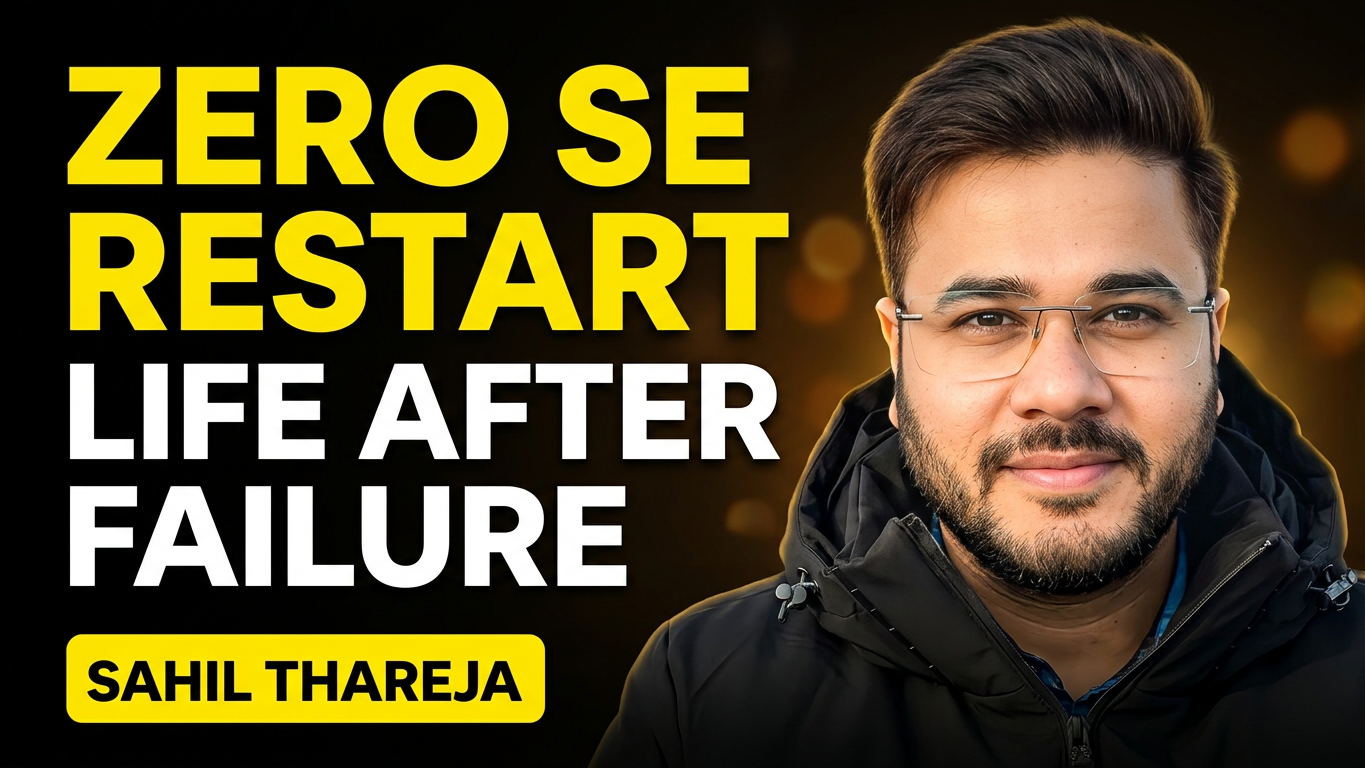
What Long Legal Battles Teach Us About Life, Family & Moving Forward | Sahil Thareja
The Socialens Talks Team
Some conversations are about careers. Some are about success. And some make us think more deeply about the decisions, relationships and circumstances that shape our lives.
The conversation with Sahil Thareja on The Socialens Talks is one of those conversations.
Sahil describes himself as a common man from Delhi rather than a celebrity. He shares his professional journey of around 18 years, including his experience with Air India, and talks about his efforts to build a business in Delhi. But the conversation soon moves beyond career and becomes a much more personal discussion about failure, starting again, marriage, family, legal proceedings, fatherhood, financial pressure and moving forward during difficult times.
This is not a conversation that presents a simple formula for life.
Instead, Sahil shares experiences that have changed the way he looks at major decisions, family responsibilities and the importance of continuing life even when circumstances become difficult.
A Conversation About Starting Again
One of the central ideas in Sahil Thareja’s conversation is the idea of starting again.
Failure can sometimes make a person feel that everything is over.
A career may not work out as expected. A relationship may change. Financial circumstances may become difficult. Personal responsibilities may become heavier than anticipated.
But starting again does not necessarily mean starting with nothing.
It can mean starting with experience.
The mistakes have already taught something. Difficult situations have revealed things that may not have been visible earlier. And the person beginning again is not the same person who started the journey the first time.
This idea of rebuilding becomes particularly meaningful in Sahil’s conversation because he speaks openly about both professional uncertainty and personal challenges.
What Would You Tell Your Younger Self?
One of the most thoughtful parts of the conversation comes when Sahil is asked what he would tell his younger self.
His answer focuses on patience and thoughtful decision-making.
He talks about listening to parents and not making major life decisions in haste, particularly decisions connected with marriage and family.
The larger message is simple:
Important decisions deserve time and thought.
Some decisions affect only the individual making them.
Others can affect parents, partners, children and entire families.
That is why taking time to understand the consequences of a major decision can matter just as much as making the decision itself.
Marriage Is More Than a Single Decision
Marriage is another major theme in the conversation.
Sahil reflects on the way many people grow up believing that marriage is simply a natural and necessary stage of life.
But marriage also brings responsibilities.
There can be emotional responsibilities, financial responsibilities, family responsibilities and, eventually, parenting responsibilities.
Sahil explains that he is not against marriage. His point is about awareness and preparation rather than opposing marriage itself.
The conversation therefore raises an important question:
Do people spend enough time understanding the responsibilities that come with major life decisions?
For Sahil, his own experience has made this question much more important.
When Personal Problems Become Legal Matters
A significant portion of the conversation focuses on Sahil’s experience with legal proceedings.
He discusses how difficult it can be for an ordinary person to understand legal procedures, particularly when they have never previously dealt with the court system.
Even someone who is educated or professionally experienced may find unfamiliar legal processes difficult to navigate.
For Sahil, the experience has affected more than one part of his life.
Legal proceedings can consume time and attention while the individual still has to think about work, money, family and the future.
This is one reason the conversation is broader than a discussion about courts.
It is really about what happens to everyday life when a major personal problem becomes a prolonged legal matter.
Legal Awareness Is Important
Sahil repeatedly discusses the importance of understanding legal procedures and responsibilities.
His comments come from his own experience and should not be treated as legal advice.
The broader point, however, is relevant to anyone dealing with an unfamiliar legal situation:
Understand the process, understand your responsibilities and seek advice from a qualified professional when necessary.
A personal story can help someone understand what another person experienced, but it cannot replace professional advice specific to an individual’s circumstances.
That distinction is especially important when discussing family and legal matters.
The Financial Pressure of a Difficult Chapter
Personal and legal difficulties can also have financial consequences.
In the conversation, Sahil discusses financial pressure and questions around money, maintenance and the effect of prolonged personal difficulties on professional life.
Financial pressure can influence much more than monthly expenses.
It can affect:
- savings
- career plans
- business decisions
- family responsibilities
- future planning
- and personal stability.
For someone trying to rebuild professionally, managing these pressures can make the process of starting again even more complicated.
The Human Being Behind Every Legal Case
Legal matters are often discussed through documents, procedures and court terminology.
But behind every case is a human being.
That person may have:
- a career
- parents
- children
- financial responsibilities
- professional ambitions
- relationships
- and a life outside the legal matter.
Sahil’s conversation repeatedly brings attention back to this human side.
A legal dispute can become an important part of someone’s life, but it does not mean that everything else should stop.
Sahil’s message to people going through difficult circumstances is to deal with their problems while also continuing to move forward with their lives.
Fatherhood and the Importance of Time
One of the most personal sections of the conversation comes when Sahil talks about his son.
He describes the difficulty of not being able to spend as much time with his child as he would like.
For a parent, ordinary moments can be extremely important.
Going to school.
Playing together.
Sharing a meal.
Talking about the day.
Helping with activities.
Simply being present.
Sahil explains that his circumstances have limited the amount of time he can spend with his son, and he speaks about how deeply that affects him.
This part of the conversation makes the discussion much more personal.
It shows that behind complicated adult circumstances, there can also be a child and a parent trying to maintain their relationship.
Children Should Not Carry Adult Conflicts
Another important theme emerging from the conversation is the effect that family circumstances can have on children.
Adults may have disagreements.
They may have different perspectives.
They may find themselves involved in difficult personal situations.
But children are not responsible for those disagreements.
They still need care, affection, attention and emotional support.
Sahil’s comments about his own relationship with his child come from his personal experience. They are not presented here as a universal legal conclusion about custody or family law.
Instead, they raise a human question:
How can adults protect children from becoming the emotional burden of adult conflicts?
That is a question worth discussing in any family situation.
The Challenge of Balancing Work and Family
Sahil also talks about the difficulty of balancing professional responsibilities with family life.
For working parents, this can be a constant challenge.
There are professional deadlines.
There are financial responsibilities.
There are family commitments.
And there are children who need time and attention.
When personal difficulties or legal matters are added to this situation, maintaining balance can become even more difficult.
The conversation therefore raises a question that many working parents can relate to:
How do we build our careers while still remaining present for the people who matter most to us?
There may not be one universal answer.
But recognising the importance of that balance is an important beginning.
What Does Success Really Mean?
Sahil also reflects on the different ways people define success.
For some people, success means financial growth.
For others, it may mean professional recognition.
For someone else, success could mean peace of mind, meaningful relationships or becoming a better person.
A person can be professionally successful and still experience serious personal difficulties.
Likewise, financial achievement does not automatically guarantee peace or fulfilment.
This makes the conversation about success much more realistic.
Success is not always visible from the outside.
When Life Does Not Go According to Plan
Most people make plans.
Career plans.
Marriage plans.
Financial plans.
Family plans.
But life does not always follow those plans.
Circumstances change.
Relationships change.
Careers change.
Responsibilities change.
Sometimes a person has to rebuild a life that looks very different from the one they originally imagined.
Sahil’s story reflects that reality.
The important point is not that difficult circumstances can simply be ignored.
It is that a difficult chapter does not necessarily have to become the final chapter.
Moving Forward Without Ignoring the Problem
Sahil does not suggest that people should run away from difficult situations.
His message is closer to the opposite.
Deal with the problem.
Follow the required process.
Take appropriate guidance.
But at the same time, continue living.
Continue working.
Continue learning.
Continue building your future.
He talks about the importance of remaining mentally strong and not allowing a legal or personal dispute to become the entire identity of one’s life.
That may be one of the strongest messages of Episode 022.
The Importance of Patience
Patience appears repeatedly throughout Sahil’s reflections.
He talks about thinking carefully before making major decisions and not allowing haste to determine important parts of life.
This is particularly relevant to decisions that can have long-term consequences.
A decision made in a moment can sometimes affect years of life.
That is why his advice to his younger self is worth remembering:
Think carefully. Be patient. Understand the consequences before making major decisions.
What We Can Learn From Sahil Thareja’s Experience
Sahil’s story is personal, but the conversation raises several broader questions.
1. Major decisions deserve serious thought
Marriage, career and family decisions can affect many people. Taking time to understand them can be important.
2. Failure can become a learning experience
A setback does not automatically mean that the journey is over.
3. Legal awareness matters
People dealing with legal issues should understand the process and seek appropriate professional guidance.
4. Children deserve protection from adult conflicts
Whatever disagreements adults may have, children still need care, stability and healthy relationships.
5. Financial stability matters
Long periods of personal difficulty can affect savings, career plans and future decisions.
6. Work and family both require attention
Professional responsibilities are important, but family relationships also require time and presence.
7. Starting again is possible
A changed situation can still become the beginning of something new.
8. A difficult chapter does not define the whole life
Problems may become an important part of someone’s story without becoming the complete story.
Related Conversations From The Socialens Talks
Sahil Thareja’s conversation connects naturally with several other conversations on The Socialens Talks. These episodes explore related themes such as family, social values, personal struggles, relationships, self-awareness and life experiences.
Ira H. Mathpal — Confidence, Self-Respect & Building a Better Society
Ira H. Mathpal discusses confidence, self-respect, women’s empowerment, parenting, values and the importance of building a more aware and balanced society.
Read the Ira H. Mathpal Conversation:
Ira H. Mathpal on Confidence, Self-Respect & Empowerment
Aditi Sharma — Identity, Family, Social Acceptance & Dignity
Aditi Sharma’s conversation explores identity, family acceptance, social challenges, entrepreneurship and the importance of dignity and support within society.
Read the Aditi Sharma Conversation:
Aditi Sharma Podcast
Rajiv Saxena — Mind, Memory, Inner Peace & the Journey Within
For readers interested in the internal side of difficult experiences, Rajiv Saxena’s conversation explores the mind, memory, awareness, spirituality and personal understanding.
Read Rajiv Saxena Part 2:
Rajiv Saxena Part 2
Chirag Tanwar — Spirituality, Respect & Social Responsibility
Chirag Tanwar’s conversation discusses spirituality, respect, family values, social awareness and personal responsibility in everyday life.
Read the Chirag Tanwar Conversation:
Chirag Tanwar Podcast
Arjun Thapa & Anamika Raj — Acting, Rejection & Life Decisions
Their conversation explores rejection, family support, career uncertainty, financial realities and the challenges of building a creative career.
Read the Arjun Thapa & Anamika Raj Conversation:
Arjun Thapa & Anamika Raj Podcast
About Episode 022
This article is based on Episode 022 of The Socialens Talks featuring Sahil Thareja.
The conversation covers his professional journey, experiences with failure, starting again, marriage and family decisions, legal proceedings, financial pressure, fatherhood, his relationship with his child and his perspective on continuing life through difficult circumstances.
The legal and family-related observations in this article are presented as Sahil Thareja’s personal experiences and perspectives shared during the recorded conversation. They should not be treated as legal advice or as a universal description of every family or legal matter.
Watch Episode 022 — Sahil Thareja
Zero Se Restart | Sahil Thareja
Watch the complete conversation on YouTube:
Watch Sahil Thareja – Episode 022
You can also explore the complete The Socialens Talks Conversations archive:
Frequently Asked Questions
Who is Sahil Thareja?
Sahil Thareja is a professional from Delhi who describes himself as a common man rather than a celebrity. During the conversation, he discusses around 18 years of professional experience, including his experience with Air India, and his efforts to build a business in Delhi.
What is Sahil Thareja’s Episode 022 about?
Episode 022 covers failure, starting again, career experiences, marriage and family decisions, legal proceedings, financial pressure, fatherhood, parenting and moving forward through difficult circumstances.
What does Sahil say about failure?
Sahil discusses failure as an experience from which people can learn and reflects on periods when life felt extremely difficult.
What advice does Sahil give his younger self?
He emphasises listening to parents, avoiding rushed major decisions and approaching important life choices with patience and careful thought.
Is Sahil Thareja against marriage?
No. During the conversation, Sahil specifically clarifies that he is not against marriage. His emphasis is on awareness, preparation and understanding the responsibilities associated with major family decisions.
Does this article provide legal advice?
No. The article presents Sahil’s personal experiences and perspectives. Anyone dealing with a specific legal matter should seek advice from an appropriately qualified legal professional.
Why does Sahil talk about fatherhood?
Fatherhood is an important part of the conversation because Sahil discusses his relationship with his son and the difficulty of spending as much time with him as he would like.
What is the main message of Episode 022?
One of the central messages is that people can address difficult circumstances while continuing to build the other parts of their lives. A difficult situation does not have to become the entirety of a person’s identity.
Final Thoughts
The Sahil Thareja conversation is not simply about legal proceedings.
It is about what happens when life does not go according to plan.
It is about failure.
It is about starting again.
It is about making important decisions.
It is about family and responsibility.
It is about fatherhood.
It is about financial pressure.
And it is about finding the strength to continue moving forward when circumstances become difficult.
Sahil’s story is his own.
His experiences are personal.
But the questions raised during the conversation are much wider:
How carefully do we make the biggest decisions of our lives?
How prepared are we for the responsibilities that come with those decisions?
How can adults protect children from the consequences of adult conflicts?
And when life forces us to start again, can we find the courage to build something new?
There may not be one simple answer to these questions.
But they are worth discussing.
And that is what makes Episode 022 with Sahil Thareja an important conversation on The Socialens Talks.
Real Conversations. Real Stories. Different Perspectives.